• ROMARCH: temporary lectureship in Roman art and archaeology, Oxford

    Departmental Lecturer in Roman Art and Archaeology
    Faculty of Classics, Ioannou Centre for Classical and Byzantine Studies, 66 St Giles’, Oxford

    Grade 7: £30,738 – £37,768 p.a.

    The Faculty of Classics is seeking to appoint a Departmental Lecturer in Roman Art and Archaeology from 1 January 2017. The appointment will be for a fixed period of 12 months to cover the teaching and other duties of Dr Janet DeLaine while she holds a Leverhulme Research Fellowship.

    The postholder is expected to lecture and teach both undergraduate and graduate students and to engage in advanced study and research on Roman Art and Archaeology, c. 300 BC – AD 300. She or he will also be expected to engage in examination assessment, admissions processes, and faculty administration. The postholder will be required to deliver up to 36 hours of faculty lectures or classes per year, supported by the production of course materials as required; undertake up to 6 contact hours of Classics teaching each week for the Faculty of Classics [for Colleges], in tutorials or small classes, averaged over the three 8-week terms of this appointment; and undertake Masters teaching as required within their area of expertise.

    The successful candidate will have: a doctorate (to be completed by 1 January 2017) in some area of Roman Art and Archaeology c. 300 BC- AD 300; a record of successful undergraduate teaching within the field of appointment; sufficient depth and breadth of knowledge in the subject to teach across a range of topics; an ongoing programme of research; and the ability to collaborate effectively with colleagues in a college and/or faculty environment. 

    Applications for this vacancy are to be made online via http://www.recruit.ox.ac.uk and enter Vacancy ID 123611.

    The closing date for applications is 12.00 noon on 22 June 2016. It is expected that interviews will be held in late June 2016.

    Contact Person : Miss Philippa Crowley

    Contact Phone : 01865 288391

    Contact Email : recruitment@classics.ox.ac.uk

    Link: https://www.recruit.ox.ac.uk/pls/hrisliverecruit/erq_jobspec_details_form.jobspec?p_id=123611  

    __._,_.___

    Posted by: Peter Stewart <peter.stewart@classics.ox.ac.uk>

  • ROMARCH: Conference, Late Antique Archaeology 2016: ENVIRONMENT AND SOCIETY IN THE FIRST MILLENNIUM A.D.

    Late Antique Archaeology 2016: ENVIRONMENT AND SOCIETY IN THE FIRST MILLENNIUM A.D.

    To be held at The Society of Antiquaries, Burlington House, Piccadilly, London W1J 0BE (inside the Royal Academy), Saturday 8th October 2016

    *Regional vegetation histories: overview of the pollen evidence*
    1. Western Mediterranean – José Antonio López-Sáez (Madrid), Neil Roberts (Plymouth)
    2. Central Mediterranean – Laura Sadori (Rome), Alessia Masi (Rome), Anna Maria Mercuri (Modena), Katerina Kouli (Athens)
    3. Eastern Mediterranean – TBC
    4. Northern Europe – Jessie Woodbridge (Plymouth), Ralph Fyfe (Plymouth), Neil Roberts (Plymouth)
    5. Britain – Stephen Rippon (Exeter), Ralph Fyfe (Plymouth)

    *Local and regional case studies: integrating archaeology, history and the environmental sciences*
    6. Avkat and Northern Anatolia – John Haldon (Princeton)
    7. Sophiana and South Italy – Emanuele Vaccaro (Cambridge), Anna Maria Mercuri (Modena) and Michael MacKinnon (Winnipeg)
    8. Sagalassos and South-Western Anatolia – Gert Verstraeten (Leuven), Nils Broothaerts (Leuven), Maarten Van Loo (Leuven)
    9. Tabacalera (Asturias) – Leonor Pena Chocarro (Madrid) and others

    *Mediterranean thematic surveys*
    10. Climatic changes and their impact on the late antique societies: general trends and interregional variability – Neil Roberts (Plymouth), Inga Labuhn (Lund), Adam Izdebski (Krakow)
    11. Deforestation and reforestation during the Roman Antiquity – William Harris (Columbia)
    12. The late antique rural settlement boom and its environmental impact across the Mediterranean – Alexandra Chavarria (Padua) and Adam Izdebski (Krakow)
    13. Land use, social structure and the environment in Late Antiquity – Mark Whittow (Oxford)
    14. Environment and the end of Antiquity, or is there a link between the fall of Rome and a major environmental catastrophe? – Adam Izdebski (Krakow)
    Continue reading

  • ROMARCH: Archaeological Field School, Middle Strymon Valley and Parthicopolis, Summer 2016

    AMERICAN RESEARCH CENTER IN SOFIA SUMMER ARCHAEOLOGY PROGRAM, 2016

    AIA AFOB:
    https://www.archaeological.org/fieldwork/afob/20685.

    Archaeological Field School at Parthicopolis with excursions to archaeological sites in Bulgaria and Greece

    Field School/Excavation Directors: Dr. Emil Nankov (ARCS), Vladimir Petkov (Archaeological Museum, Sandanski)

    Duration: May 30 (arrival to Sofia) – June 27, 2016 (departure from Sofia)

    Eligibility: advanced undergraduate and graduate students of universities based in North America and Europe in the fieldsof Archaeology, Anthropology, Classical Studies, Ancient History and related studies

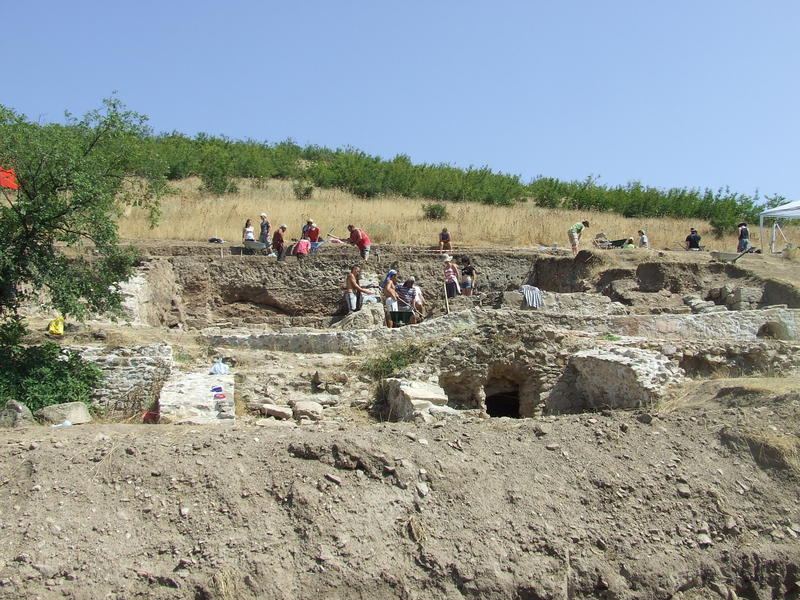
    The American Research Center in Sofia is pleased to announce its fifth summer season in the Middle Strymon Valley and the second Archaeological Field School at Parthicopolis (Bulgaria).

    Students will arrive in Sofia on May 30 and will spend two days exploring the archaeology and history of its Roman predecessor, Serdica. On June 1, the Team will begin an archaeological journey, visiting sites and museums in Sofia and in Plovdiv. We will arrive in the city of Sandanski on June 3, the home base of the ARCS excavations at Parthicopolis. The excavation team will reside in a hotel in Sandanski during the 3-week excavation season. Archaeological work is conducted Monday-Friday with additional excursions to southwest Bulgaria and northern Greece on Saturdays. The Team will be accompanied back to Sofia on June 26, where they will stay one night, departing from Sofia on June 27.

    Deadline to apply: March 15, 201(read more below)

    Continue reading

  • ROMARCH: Archaeological Field School, Heraclea Sintica, Summer 2016

    ARCHAEOLOGICAL FIELD SCHOOL AT HERACLEA SINTICA2016

    The Hellenistic and Roman city of Heraclea Sintica is located near the  city of Petrich (SW corner of Bulgaria) which is situated 180 km south  of Sofia (Bulgaria) and 130 km north of Thessaloniki (Greece).

    Heraclea Sintica was founded as a Macedonian colony in the end of 4th c. BC. It was the main settlement of the Middle Struma (ancient Strymon) River region till the end of 4th c. AD. Since 2007 systematic archaeological excavations have been carried out.

    The current ArchBulg Field School will focus upon Late Roman civilian basilica (3rd ‒ 4th c. AD) and an Early Hellenistic building (end of 4th c. BC).

    Details about the summer school and the site can be found at:

    www.archaeologia-bulgarica.com

    Dr. Lyudmil Vagalinski
    director
    National Archaeological Institute with Museum
    BG-Sofia
    www.naim.bg

  • ROMARCH: 2016 Archaeological Field School: Trasimeno (Italy)

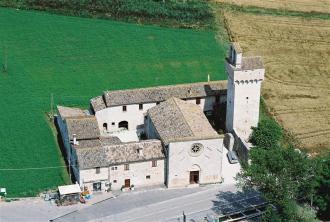
    The Trasimeno Archaeology Field School of the Umbra Institute in Perugia provides a curricular concentration in Archaeology and History based in Castiglione del Lago on the shores of Lake Trasimeno between Umbria and Tuscany.

    The Site

    Castiglione del Lago is a charming medieval town in Umbria, located on top of a small peninsula along the southwestern shores of Lake Trasimeno.  A member of the prestigious I Borghi più Belli d’Italia Association (The Most Beautiful Villages in Italy, www.borghitalia.it), Castiglione lies among renowned historical cities, such as Orvieto, Chiusi, Arezzo, Cortona and Perugia. All Field School participants will stay in Castiglione during the summer term, only a few miles away from Perugia and easily accessible either by bus or train.

    The Academic Program

    The Field School consists of two courses, one theoretical and one practical, both held in Castiglione del Lago. The program aims to provide students with a comprehensive overview of up-to-date theories and methods of archaeological research and fieldwork as applied to the civilizations that shaped the history and culture of central Italy. The Field School runs for 6 weeks, from the beginning of June through mid-July. Program dates for the summer 2015 will be May 29th (arrival in Italy) to July 11th (departure). 

    The course ARFW 350: Archaeological Field Workshop is an archaeology practicum. Students will work alongside professional archaeological staff to gain fundamental skills in archaeological research and apply them to the project.
    Course Credit: 3

    The course ARCL 340: Archaeology in Central Italy: The Etruscan and Roman Heritageintroduces students to the region’s history and heritage, and provides context for the archaeological research project.
    Course Credit: 3

    Both courses are non-prerequisite and mandatory. They include fieldtrips to various archaeological and cultural sites, including an overnight trip to Rome. Fieldtrips are designed to enhance student understanding of the territory’s history, while also providing the opportunity to study and visit neighboring archaeological sites and major museum collections.

    Click on the project website: http://www.umbra.org/academics/archaeology-summer/

    Continue reading

  • ROMARCH: Summer 2016 Archaeology Program in Sofia, Bulgaria

    logoAMERICAN RESEARCH CENTER IN SOFIA SUMMER PROGRAM IN ARCHAEOLOGY, 201

    Archaeological Field School at Parthicopolis with excursions to archaeological sites in Bulgaria and Greece

    Field School/Excavation Directors: Dr. Emil Nankov (ARCS), Vladimir Petkov (Archaeological Museum, Sandanski)

    Duration: May 30 (arrival to Sofia) – June 27, 2016 (departure from Sofia)

    Eligibility: advanced undergraduate and graduate students of universities based in North America and Europe in the fields of Archaeology, Anthropology, Classical Studies, Ancient History and related studies

    The American Research Center in Sofia is pleased to announce its fifth summer season in the Middle Strymon Valley and the second Archaeological Field School at Parthicopolis (Bulgaria).

    Continue reading