• ROMARCH: Oxford Exhibition; Engraved Gems and the Classical Tradition

    Engraved Gems and the Classical Tradition A new exhibition in the Upper Library at Christ Church, Oxford.

    Although gems are modest in size, gem engraving was a major art in antiquity. From the Renaissance on Greek and Roman intaglios and cameos were collected, observed and copied. Scholars could learn about the appearance of gem subjects through publications, often initiated by their almost obsessive collectors, but also through the expanding production of impressions and casts of gems in a variety of materials. This exhibition will give examples of a wide range of these, from sealing wax to glass paste. It will also show a number of original gems. Books on engraved gems of the 17th to 19th centuries from the Christ Church Library are illustrated with impressions, electrotypes and casts from Oxford’s Beazley Archive, and intaglios and cameos from private collections.

    A highlight in the exhibition is a sardonyx from the collection of the Earl of Carlisle. The cameo was engraved by Alexander Cesati (1510-64), and shows Cupid taming a lion in the presence of two nymphs. Continue reading

  • Translating Pliny’s letters about Vesuvius, pt. 6. Fortune Favors the Brave

    A Roman seaside villa on a sunnier day (fresco from the Villa San Marco, Stabiae)

    6.16.11-12: Fortune Favors the Brave

    This post belongs to a serialized translation and commentary of Pliny the Younger’s letters (6.16 and 6.20) to the historian Tacitus about the eruption of Mount Vesuvius in AD 79. This is the fourth installment for letter 6.16.

    At this point in the story, the Elder Pliny has set off to rescue citizens trapped in their villas below Vesuvius on the east edge of the Bay of Naples. He is commanding several warships, and noting down his observations of the eruption as it develops. It is likely late afternoon as the ships approach shore.

    Continue reading

  • Habits in College and the Real World

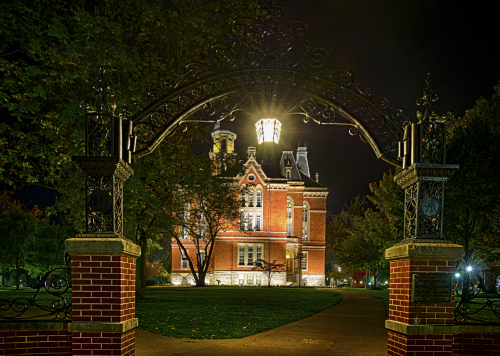
    DePauw University, East College, photo by Larry Ligget, 1 Oct. 2012

    Last Friday our student newspaper, The DePauw (which has been in operation since 1852) published an opinion piece by a first-year student essentially arguing that professors should not require attendance of their students. Part of the argument said that if students want to waste their tuition dollars, it is up to them; another part suggested that not requiring attendance would elicit positive self-motivation to be in class. In closing, the piece said that the university should have a universal policy that students, not professors, should get to decide about the value of their class attendance. The whole piece is below (note that I am going out of my way not to advertise names). [Note: a few editorial clarifications appear in brackets]. My purpose here is to consider the dialectic that has resulted.
    Continue reading

  • Translating Pliny’s letters about Vesuvius, pt. 4. A Strange Cloud

    VesuvioVintagePostcard

    Strange Cloud: non alia magis arbor quam pinus (vintage postcard from Naples)

    6.16.4-6: A Strange Cloud

    This post belongs to a serialized translation and commentary of Pliny the Younger’s letters (6.16 and 6.20) to the historian Tacitus about the eruption of Mount Vesuvius in AD 79. This is the second installment for letter 6.16.

    The Younger Pliny now begins the tale that Tacitus has asked him to share. It is critical to remember that the real subject of, and reason for, these letters, is to honor the life and memory of the Elder Pliny–not to describe a volcanic eruption and its effects–though it was the latter that the Elder Pliny was interested in recording that day, as we will see later on.

    This post will also consider the date of the eruption in some detail.

    4 Erat Miseni classemque imperio praesens regebat. Nonum kal. Septembres hora fere septima mater mea indicat ei adparere nubem inusitata et magnitudine et specie. 

    4 He (Elder Pliny) was at Misenum and he was in command of the fleet. On the ninth day before the first of September at about the seventh hour, my mother indicates to him that a cloud of unusual size and shape is appearing. Continue reading