• ROMARCH: Archaeologia Bulgaria vol. 16.3

    Archaeologia Bulgarica

    Recent publications:

    Lyudmil Vagalinski

    www.archaeologia-bulgarica.com

    Archaeologia Bulgarica XVI 2012 #3

    ARTICLES

    • Kogălniceanu, R.: Human Remains from the Mesolithic to the Chalcolithic
      Period in Southern Romania. An
      Update on the Discoveries…1
    • Pentschev, V.: Teil eines Sammelfunds mit „barbarischen” Nachahmungen
      von Tetradrachmen aus Thasos und
      Maroneia (І. Jh. v.Chr.) aus dem Fonds des Nationalen Historischen
      Museums Sofia…47
    • Jordanov, I.: The Diocese of Thrace (5th – 7th c.) according to the
      Sigillographic Data…57
    • Cholakov, I. D. / Chukalev, K.: Statistical Data on Archaeological
      Field Surveys in Bulgaria,
      2011 Season…77

    REVIEWS

    • Vagalinski, L. / Sharankov, N. / Torbatov, S. (eds.). The Lower Danube
      Roman Limes (1st– 6th C. AD). Sofia, 2012,
      526 pp., 275 b&w illus. (Breeze, D.)…91
    • Fingarova, G. Die Baugeschichte der Sophienkirche in Sofia. Reichert
      Verlag. Wiesbaden, 2011, 209 S., 191 Tafeln
      (Ivanov, M.)…95
  • ROMARCH: Call for Papers: APA session on the Historia Augusta

    Pasts, Presents, and Futures of the Historia Augusta

    Call for papers

    A panel proposed for the 2014 APA Annual Meeting in Chicago, IL

    Co-Organizers: Mary T. Boatwright (Duke University) and Kathryn Langenfeld (Duke University)

    As interest in the later Roman Principate and early Dominate grows and results in ever more historical, literary, cultural, and art historical studies, scholars increasingly turn to the Historia Augusta.  Although notorious for its puzzles and self-contradictions, this is our most extensive historical source reporting information about the second and third centuries CE. Furthermore, its purported Diocletianic/Constantinian date, and the authoritative (though not universally accepted) claim that this collection of imperial biographies was actually written at the end of the fourth century CE, encourages use of the Historia Augusta by those examining the later Roman empire and late antique Rome.  But the complexity of this source means it cannot simply be mined for data convenient for any particular argument, albeit presented with caveats.  More importantly, our deepening understanding of the rich culture and history of the second through fourth centuries CE enables new and beneficial inquiry into all aspects of the Historia Augusta.

    We solicit papers examining historiographical and historical issues in the HA. Continue reading

  • ROMARCH: term position in Classical Archaeology and Classics at DePauw University

    DePauw, photo by Larry Ligget

    DePauw University, 15 Jan. 2013; photo by Larry Ligget

    DePauw University – Greencastle, IN

    The Department of Classical Studies invites applications for a one-year term position beginning August 2013. Rank and salary commensurate with experience. Ph.D. preferred. We seek a Classical Archaeologist with a broad training in Classical Studies. Teaching load is 3/3 and includes courses in archaeology, classical civilization (e.g. Myth), and Greek or Latin at all undergraduate levels. Commitment to undergraduate teaching in a liberal arts environment is essential. For information about the department, please visit: http://www.depauw.edu/academics/departments-programs/classical-studies/.

    Application materials should include the following: an application letter, curriculum vitae, copy of transcripts, three letters of recommendation, statement of teaching philosophy and scholarly interests, evidence of teaching effectiveness, and a short manuscript or offprint. All materials should be submitted electronically to: classicssearch@depauw.edu. Review of applications will begin March 1, 2013 and continue until the position is filled. DePauw University is an Equal Employment Opportunity Employer. Women and members of underrepresented groups are encouraged to apply.

  • ROMARCH: Heraclea Sintica Conference, call for papers


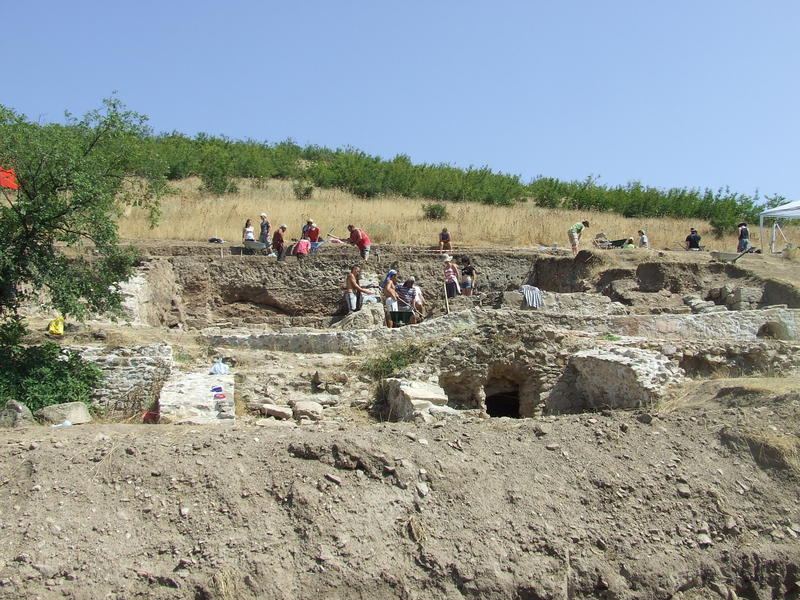
    Heraclea Sintica: from Hellenistic polis to Roman civitas (4th c. BC – 6th c. AD)

    Dates: September 19-21, 2013;
    Location: Petrich, Bulgaria; Hotel Bats.
    Organizers: National Institute of Archaeology with Museum at Bulgarian
    Academy of Sciences, American Research Center in Sofia, Museum of
    History-Petrich
    Sponsors: American Research Center in Sofia, Municipality of Petrich

    This international conference will bring together leading scholars to present recent work on the site of Heraclea Sintica, situated near the village of Rupite, ca. 12 km northeast of Petrich, SW Bulgaria. The presentations will be arranged in thematic sections devoted to particular topics, such as, but not limited to:

    1. Historical topography of Heraclea and its city territory, including necropoleis;
    2. Recent archaeological excavations on the site;
    3. Diachronic surveys on literary sources and epigraphic documents;
    4. Religious monuments and associated cult practices;
    5. Patterns of coin circulation as related to economy and local markets.

    Continue reading