• ROMARCH: 2017 Archaeological Field School: Trasimeno (Italy)

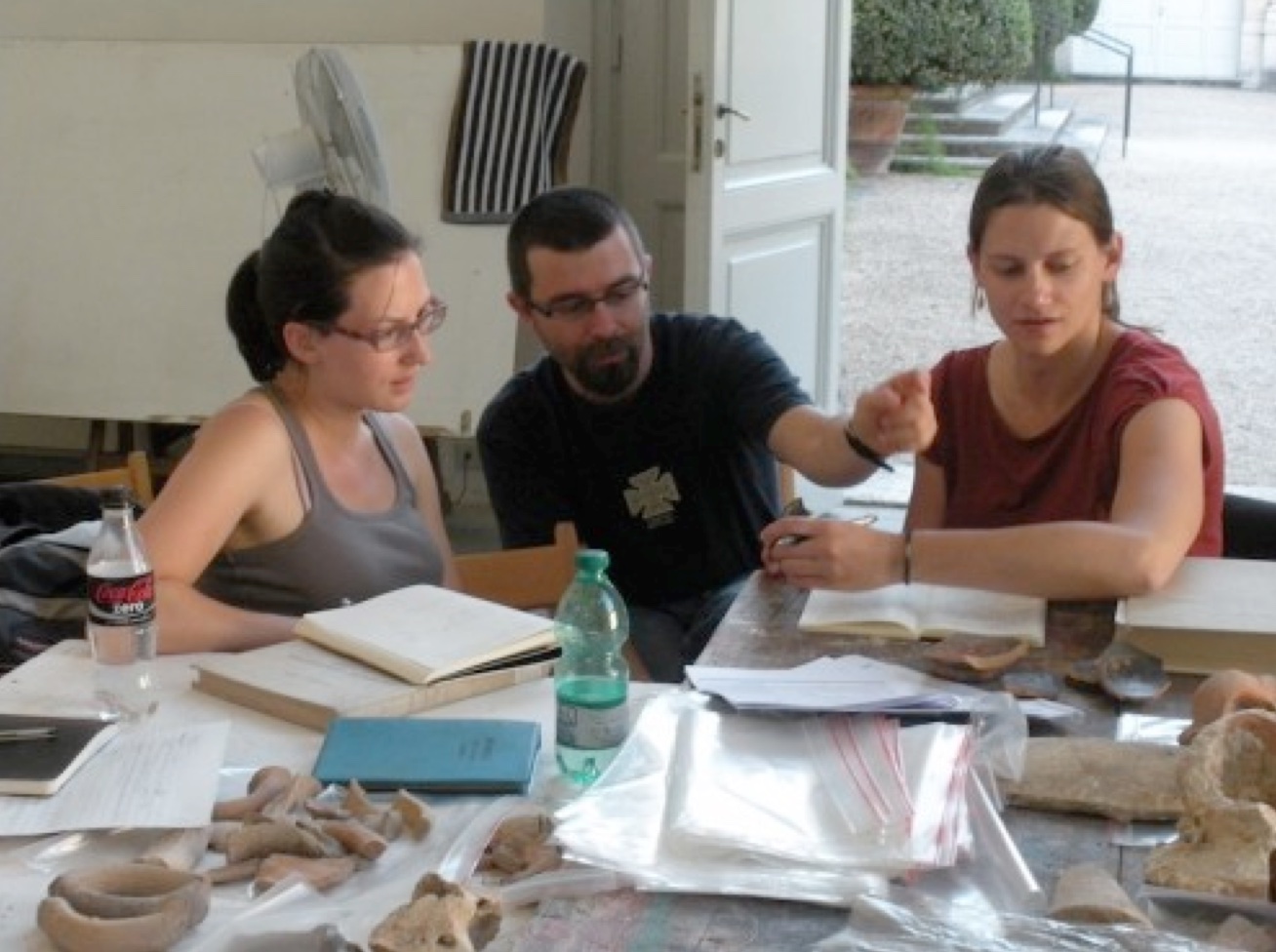
    clg15_finalreportfig12The Trasimeno Archaeology Field School of the Umbra Institute in Perugia provides a curricular concentration in Archaeology and History based in Castiglione del Lago on the shores of Lake Trasimeno between Umbria and Tuscany.

    The Site 

    Castiglione del Lago is a charming medieval town in Umbria, located on top of a small peninsula along the southwestern shores of Lake Trasimeno.  A member of the prestigious I Borghi più Belli d’Italia Association (The Most Beautiful Villages in Italy, www.borghitalia.it), Castiglione lies among renowned historical cities, such as Orvieto, Chiusi, Arezzo, Cortona and Perugia. All Field School participants will stay in Castiglione during the summer term, only a few miles away from Perugia and easily accessible either by bus or train.

    The Academic Program

    The Field School consists of two courses, one theoretical and one practical, both held in Castiglione del Lago. The program aims to provide students with a comprehensive overview of up-to-date theories and methods of archaeological research and fieldwork as applied to the civilizations that shaped the history and culture of central Italy. The Field School runs for 6 weeks. Program dates for the summer 2017 will be May 27th (arrival in Italy) to July 8th (departure). 

    The course ARFW 350: Archaeological Field Workshop is an archaeology practicum. Students will work alongside professional archaeological staff to gain fundamental skills in archaeological research and apply them to the project.
    Course Credit: 3

    The course ARCL 340: Archaeology in Central Italy: The Etruscan and Roman Heritageintroduces students to the region’s history and heritage, and provides context for the archaeological research project.
    Course Credit: 3

    Both courses are non-prerequisite and mandatory. They include fieldtrips to various archaeological and cultural sites, including an overnight trip to Rome. Fieldtrips are designed to enhance student understanding of the territory’s history, while also providing the opportunity to study and visit neighboring archaeological sites and major museum collections.

    Click on the host website: http://www.umbra.org/academics/archaeology-summer/

    Or visit the project blog, including links to publications: https://archaeotrasimeno.wordpress.com
    Continue reading

  • ROMARCH: American Academy in Rome Summer School in Roman Pottery 2017

    potteryrome

    Application deadline extended to 17 February!

    SKILLS IN ARCHAEOLOGY: THE HOWARD COMFORT, FAAR’29, SUMMER SCHOOL IN ROMAN POTTERY STUDIES

    Potsherds constitute the most frequent group of finds on archaeological sites in the Mediterranean. Thus pottery studies form an essential part of any archaeological research project. Pottery usually offers the most important evidence for dating sites and provides a major source for studies ranging from trade relations and food consumption to questions of identity.

    The Summer School in Roman Pottery Studies is a four-week program designed to present the basics of Roman pottery studies, which can be gained only through direct contact with ceramic assemblages. As Rome had the most diversified pottery supply among sites in the ancient world, the AAR is well placed, through its own collections and other material deposited there, to teach a subject rarely offered in American universities. Since the School’s establishment in 2006 to honor the memory of Howard Comfort (a Fellow of the American Academy in Rome and an eminent scholar of Roman pottery), it has thus come to fill a need, gaining a reputation as the premier venue for introducing aspiring scholars to the field, and its alumni are increasingly in demand on projects in Italy and elsewhere.

    The course consists of two parts: the taught seminar, where students will learn the fundamentals of Roman pottery including single ceramic classes with their characteristics, function, date and provenience. This section will also include a variety of field trips and visits to major collections. In the second part the participants will apply their knowledge to an assemblage of ceramic Veii. This element is designed to give the participants practical experience by working on their own or in small groups under the supervision of the director.

    Continue reading

  • ROMARCH: AIA meeting 2018, call for papers, Dura-Europus colloquium

    aia
    Proposed “Colloquium Session” for AIA Annual Meeting

    Boston, January 4-7, 2018

    Archaeology from a distance: Dura-Europos in the new millennium

    Organizers/discussants:

    Dr. Jen Baird, Birkbeck College, University of London and Dr. Lisa Brody, Yale University Art Gallery

    We invite proposals for papers (15-20 minutes each) presenting research on the site of Dura-Europos and its multicultural heritage. Identified almost a century ago, Dura on the Syrian Euphrates is one of the most extensively excavated urban sites of the Arsacid and Roman Near East. While the site has been heavily looted during the current conflict in Syria, there is tremendous potential for new research and analysis of the site and its archaeology, including that which builds on the archives and objects from Dura held in the collections of the Yale University Art Gallery.

    This session aims to bring together international scholars working on Dura-Europos and we invite papers that investigate the site and address questions including:

    What is the status of Dura in the 21st century? How might Dura inform our understanding of the Roman Empire and its interaction with eastern cultures? How can the Dura archives and collection at Yale facilitate reinterpretation of existing theories and assumptions regarding culture in the Roman East? What are the potentials and pitfalls of working with ‘legacy’ data, especially when the site is no longer accessible to Western scholars?

    In order to participate, please submit an abstract (up to 400 words) to Jen Baird (j.baird@bbk.ac.uk) and Lisa Brody (lisa.brody@yale.edu) by February 24, 2017.  The abstracts are reviewed anonymously so attach a PDF or WORD document without your name and affiliation to your e-mail message.


  • ROMARCH: Call for Participants, Excavations at Roman Carsulae (Italy), 2017

    Excavating the Baths at Carsulae

    EXCAVATIONS OF THE BATHS AT ROMAN CARSULAE (ITALY)

    June 11 – July 22, 2017

    We are accepting applications from students and volunteers to participate in our eleventh season of the excavations of the baths at Roman Carsulae. The application deadline is Friday, March 31, 2017.

    Our goal for the 2017 season is to complete the excavation of the portion of the baths that lies beneath the protective roof in preparation for an intensive conservation plan that will ultimately encompass the entire bath complex.  We will also explore the area immediately to the east in order to determine the dimensions and function of two partially exposed rooms.

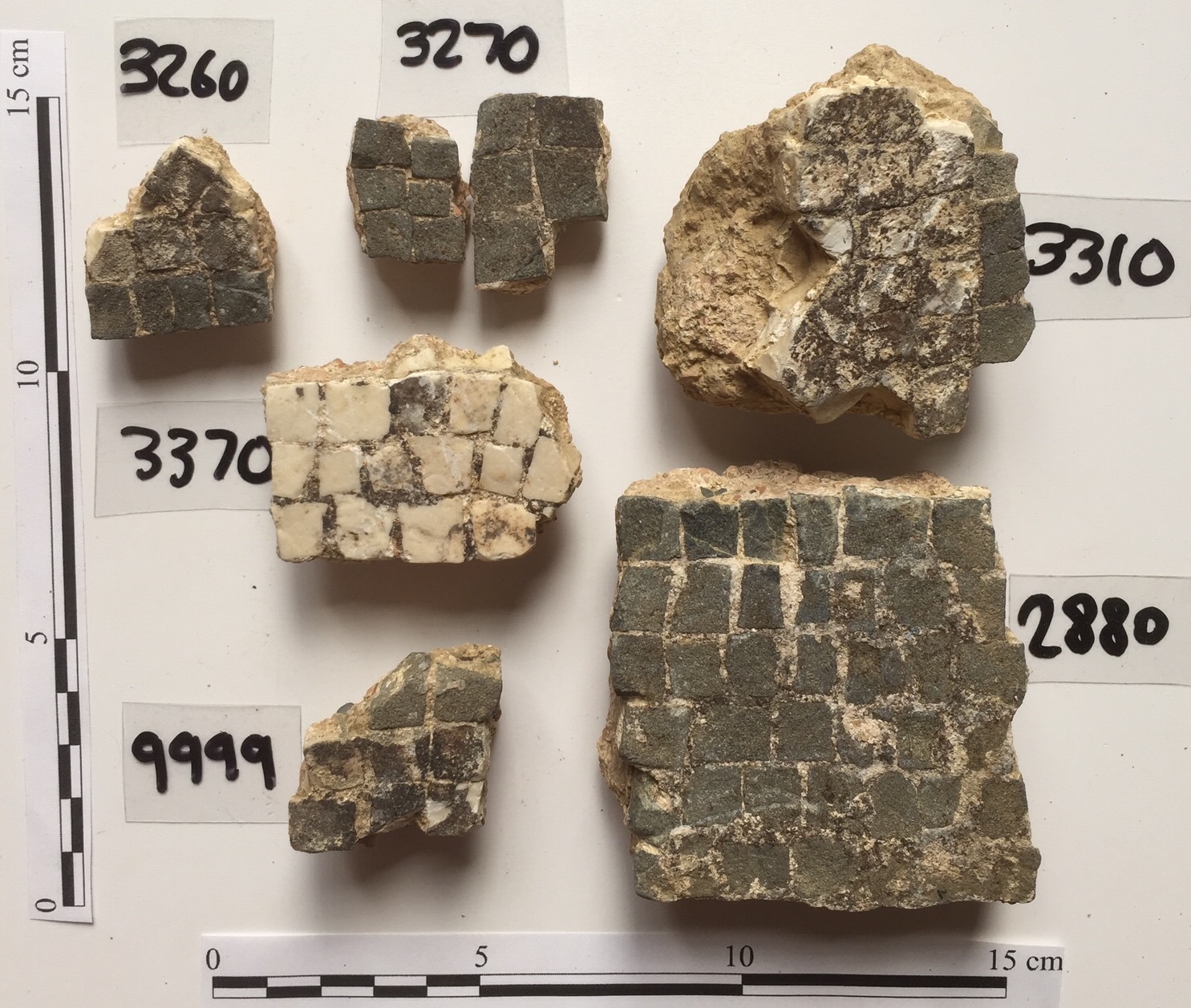
    The field program welcomes both students and volunteers. No experience is necessary, only an enthusiasm for archaeology and the ability to work hard in rigorous conditions.  Participants are instructed in excavation strategies, techniques and recording, the formulation of research questions and priorities, identification and handling of artifacts, drafting of site plans, and analytical rendering. Throughout the season, participants are given the opportunity to work with our conservators in the lab cleaning and consolidating small finds, or in the field helping to conserve the mosaics we have discovered over the course of the excavations.

    For further details such as cost, housing and the schedule, and to apply, please visit our website:  http://ww2.valdosta.edu/~jwhitehe/Carsulaeweb/Carsulae_home.htm.

    For questions, email us at ebarc.it@gmail.com.

    Thank you.

    Jane K. Whitehead, Director of the Excavations of the Baths at Roman Carsulae

    Professor Emerita, Department of Modern and Classical Languages, Valdosta State University

  • ROMARCH: New publication: Greek and Roman terracottas

    BCH_Supp_54_Livre .indb

    A new book has just been published in France that deals with Greek and Roman
    terracottas. Its title:

    A. Muller/E. Lafli (eds.), Figurines de terre cuite en Méditerranée
    grecque et romaine. Vol 1: Production, diffusion, étude. École française
    d’Athènes, Bulletin de correspondance hellénique, supplément 54
    (Paris/Athens, École française d’Athènes 2016). Pp. 517; ISBN:
    978-2-86958-274-3.

    Address for orders: École française d’Athènes, 6, Odos Didotou,
    Kolonaki, GR-10680 Athens.
    Tel.: +30.210.367 99 22.
    E-mail: marina.leclercq@efa.gr

    Vol. II of the same book was already out in 2015 (for its review: A.
    Queyrel Bottineau, Revue des études anciennes 118/2, 2016. 632-635).

    Hoping to welcoming you in Lydia Symposium in May 2017;
    best wishes from Turkey,

    Ergun LAFLI
    https://deu.academia.edu/ErgunLAFLI

  • ROMARCH: Journal of Ancient History, CFP and TOC for 2016.4

    CALL FOR PAPERS

    The Journal of Ancient History continues to invite submissions of articles. We are committed to a speedy process from submission to publication while maintaining high standards of peer-review.

    Please see our website for submission information:
    http://www.degruyter.com/view/j/jah

    Papers published in 2016:

    JAH 4 (2016)

    Marc Van De Mieroop, “The Madness of King Rusa: the psychology of despair in eighth century Assyria”

    Kevin Clinton, “The Eleusinian Anaktoron of Demeter and Kore: dedicated to Inscriptiones Graecae on the occasion of its 200th Anniversary”

    Benedikt Eckhardt, “The Seleucid Administration of Judea, the High
    Priesthood and the Rise of the Hasmoneans”

    Andrew R. Krause, “Diaspora Synagogues, Leontopolis, and the Other Jewish Temples of Egypt in the Histories of Josephus”

    Daniel J. Crosby, “The Case for Another Son of P. Quinctilius Varus: a
    re-examination of the textual and scholarly traditions around Joseph. BJ 2.68 and AJ 17.288”

    Philip Kaplan, “The Ring of Polycrates: friendship and alliance in the
    east Mediterranean”

    Marleen K. Termeer, “Roman colonial coinages beyond the city-state: a view from the Samnite world”

    Lauren Kinnee, “The Trophy Tableau Monument in Rome: from Marius to Caecilia Metella”

    Anna McGrail, “Pupil Punishment: corporal discipline in Roman education”

    ———————-
    Gary D. Farney
    Editor, Journal of Ancient History
    Associate Professor, Department of History
    Rutgers University (Newark)
    gfarney@rutgers.edu
    Webpage: http://www.ncas.rutgers.edu/gary-d-farney
    JAH Website: http://www.degruyter.com/view/j/jah
    Archaeological Field School Website: http://fieldschool.rutgers.edu


  • ROMARCH: Archaeologia Bulgaria vol. 20.3 (2016)

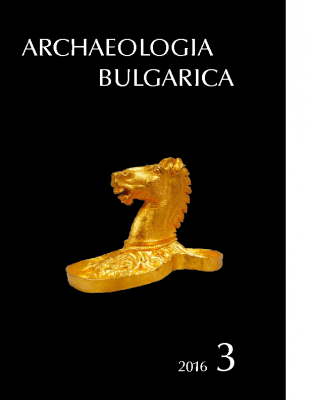
    pdf_website_archelogia_bulgarica_3_2016-thumbThe last issue of Archaeologia Bulgarica for 2016:

    Lyudmil Vagalinski, editor

    www.archaeologia-bulgarica.com

    Archaeologia Bulgarica ХХ 2016 #3
    table of contents

    ARTICLES:

    Todorov, B. / Mihaylova, V. / Gergova, D. / Kuleff, I.: The Results of
    XRF Analysis of the Early Hellenistic Gold Treasure from the Royal
    Necropolis of Dausdava/Helis (NE Bulgaria) …1

    Mustaţă, S. / Ferencz, I. V.: The Roman Bronze Vessels from the Dacian
    Fortress at Ardeu (Hunedoara County, Romania) …17

    Sharankov, N.: An Overlooked Inscription of Ala I Atectorigiana from
    Appiaria…33

    Chobanov, T.: Some Metric Observations of the St. Sophia Church in
    Sofia…41

    Curta, F.: Shedding Light on a Murky Matter: Remarks on 6th to Early 7th
    Century Clay Lamps in the Balkans…51

    www.archaeologia-bulgarica.com

  • ROMARCH: Oxford Conference, Problems of Chronology in Gandharan Art

    Apollo and Daphne: Gandharan schist dish from the Met

    Problems of Chronology in Gandharan Art,

    23-24 March 2017

    This first Gandhara Connections international workshop, generously supported by the Bagri Foundation, will take place in Oxford.

    The Gandhara Connections project identifies chronology and dating as one of the key problems outstanding in the study of Gandharan art. Chronology is not only fundamental for establishing the nature of Gandharan art’s connections with the traditions of Greece and Rome, but also for any other systematic attempt to put it in context or explain its development.

    In recent decades there have been some huge strides in understanding the chronology of Gandharan art, including invaluable results from excavations in the Swat Valley and a growing consensus about the second-century date of the Kushan ruler Kanishka and the era that he founded. However, considerable obstacles remain as a result of various factors. For example, only a portion of the thousands of Gandharan sculptures that survive come from published archaeological excavations and looting remains a big problem. Many Gandharan Buddhist sites had long lives which resulted the fascinating but confusing re-use of architectural sculpture in antiquity. There is no clear or agreed understanding about how the styles of Gandharan art changed through time, and indeed a better knowledge of dating is required to improve that understanding. We have very few inscribed artefacts which would help us to establish fixed dates, and the interpretation even of the most valuable Kushan inscriptions is sometimes still subject to debate. Finally, there are open questions about how long the Gandharan tradition continued, and consequently what its relationship is with the post-Kushan art of Central Asia. Above all, perhaps, there is further scope for understanding the art-historical implications of asking such questions.

    By pooling the most recent knowledge and critical thinking across the disciplines of archaeology, art and architectural history, epigraphy, linguistic studies and numismatics, there is the potential to move the debate forward decisively. The aim of this first international workshop in the Gandhara Connections project is to facilitate such an exchange of ideas and information. The proceedings of the workshop will be published in an open access, online book and we aim to make a recording of the event itself available online.

    Further details will follow soon. The workshop will be free, but it is necessary to book in advance by contacting: carc@classics.ox.ac.uk

    Giles Richardson
    Administrative Assistant, Classical Art Research Centre
    University of Oxford